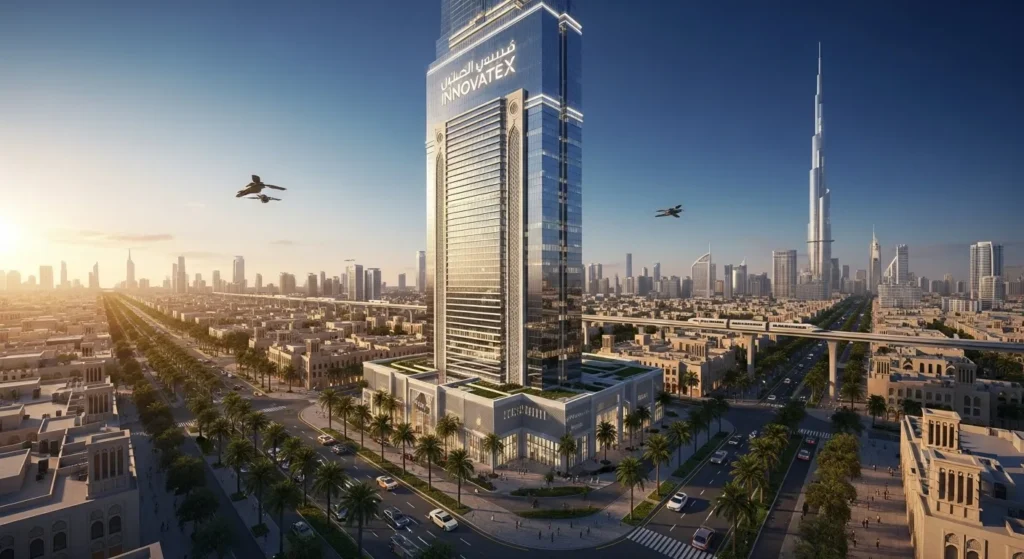
Imagine this: deserts and oil-towers, camels and fast cars, and somewhere in that mix a quiet revolution. The UAE didn’t just become a business hub overnight. It rewrote its playbook. Government vision + global capital + local ambition = a formula that turned once-small ideas into “unicorns” (companies valued over US$1 billion).
Why The UAE? Unique Ingredients for Startup Success
Several factors came together:
- Government commitment: The UAE launched campaigns to build the startup scene, such as the “Entrepreneurial Nation” initiative, aiming for multiple unicorns by 2031.
- Business-friendly ecosystem: Free zones, flexible visas, competitive corporate tax (just 9 % introduced in 2023), and modern legal frameworks.
- Strategic location & talent: The UAE sits at a crossroads of East and West, attracting global talent, investors, and companies.
- Deep pockets & global investors: Venture-capital and private equity began flowing into the region in meaningful size. For example, 40% of MENA VC investment in 2022 went into the UAE despite it representing only ~3% of the MENA population.
The Unicorn Corridor: UAE at the Launchpad
The term “unicorn corridor” refers to how the UAE, alongside Saudi Arabia and Egypt, created a repeatable path for billion-dollar startups. Here’s how it played out:
- The UAE produced some of the region’s first big unicorns (e.g., Careem, Kitopi, Tabby), which proved the model worked.
- According to one analysis: “Between 2020 and H1 2025, eight companies crossed the billion-dollar mark … The UAE sits at the centre of this story.”
- Data shows that in 2025, the UAE had 11 unicorn-valued startups alone with a combined valuation of US$17.2 billion.
Building Blocks That Made the Difference
Here are the practical mechanisms that helped:
- Anchor sectors: Fintech, e-commerce, mobility and food tech became hotbeds because they solved real inefficiencies in the region.
- Local anchor investors: Deep local capital allowed startups to stay and scale in the UAE, not just export early.
- Regional scale first, then global: Startups built for the GCC/MENA market and once proven, expanded internationally.
- Free-zones and regulatory support: Startup visas, fast incorporation, flexible zones, and a tax regime designed to attract growth.
- Public-private partnerships & hubs: For example, Hub 71 in Abu Dhabi (launched 2019), supporting tech startups via funding, network, and infrastructure.
Milestones & Ambitions – The Evidence
- As of end-2024, the UAE had produced several unicorns (five of the MENA region’s seven were UAE-based) and aimed to become the region’s startup epicentre.
- In 2023 data: Dubai-based companies raised ~60% of all MENA funding since 2012 and Dubai is home to the most region’s unicorns.
- In 2023, the UAE set a national target: to host more than 2 million startups and 10 unicorns by 2031.
- Dubai set an aim to turn 30 startups into unicorns by 2030.
Why It’s Not Just Luck (but Strategy)
This isn’t just good fortune, but also there’s a consistent pattern:
- Identify large inefficiencies (e.g., payments, mobility, marketplaces)
- Build in a market with growth potential and upgrade from local to regional
- Secure capital, network, and regulatory backing early
- Create a repeatable pathway so each success inspires the next
What This Means for Founders
If you’re building a startup in or via the UAE, here are some friendly takeaways:
- Consider the UAE as a launchpad, not only a home base: local smooth setup + regional export potential.
- Use sectors where local problems still exist (mobility, logistics, payments, climate tech) rather than crowded global markets.
- Tap into the ecosystem: free zones, incubators, VC networks, legislative-friendly environment.
- Aim for scale early: the unicorn corridor rewards companies that think regionally from day one.
- Leverage global validation: Many unicorns in the corridor combined local growth with international investor backing.
Final Word: The UAE’s Rise as Startup Powerhouse
What began as a bold vision has turned into something real. The UAE has shifted from an oil-rich desert economy to one of the world’s fastest-growing startup ecosystems.
With its infrastructure, policy clarity, capital depth and regional ambition, it now acts as a launchpad for billion-dollar companies. The “unicorn corridor” isn’t a myth, it’s being built right now, and the UAE stands at its centre.
If you’re a founder, investor or curious reader, the takeaway is clear: the UAE is not only hosting companies, it’s scaling them. The golden sand of the desert has become a golden opportunity for startups.
Also Read: How Tabby’s Founder Re‑invented Consumer Finance in the GCC